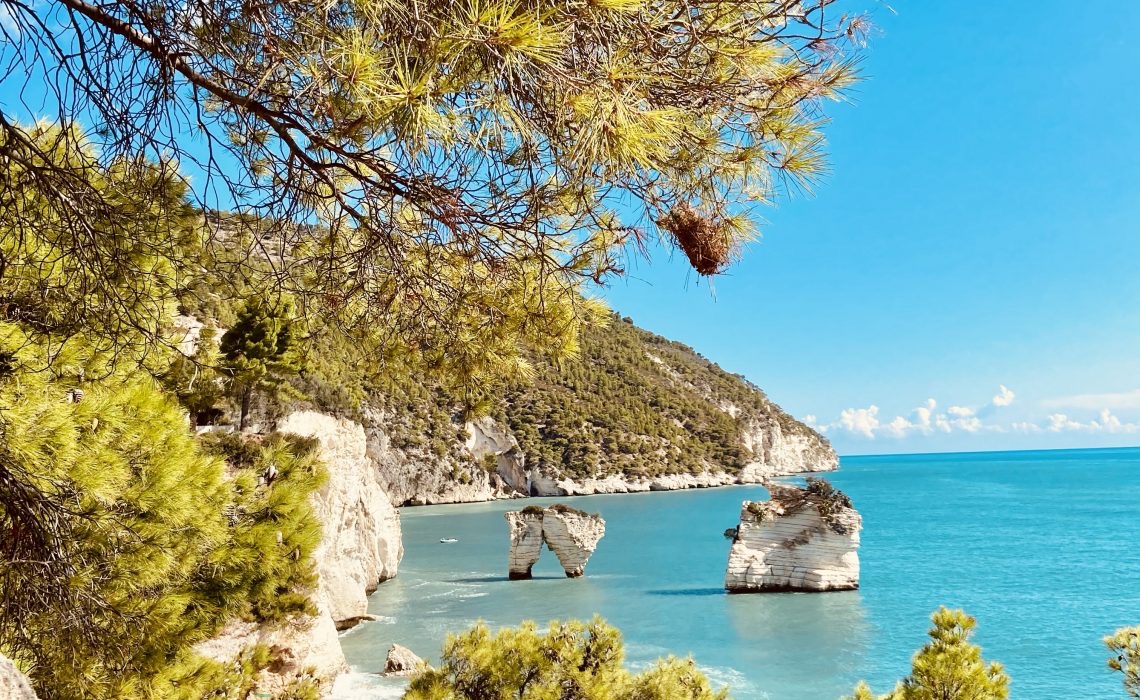
Every summer someone asks us: which is the most beautiful beach in the Gargano? It's a question you can't answer in a single breath, because it depends on what you're looking for — a flat, sandy beach easy for children, or a wild cove you reach on foot over rocky paths; a lido with sun loungers and a bar, or a free beach where you bring your own water and sandwiches.
What we can do is tell you about the coast from where we are, from Manfredonia heading north, following the Garganica coastal road all the way to Vieste. It's a journey of about 90 kilometres through some of the most beautiful seascapes in the Mediterranean — and it hides a few places most tourists never find.
Manfredonia: the starting point
Acqua di Cristo beach
Just north of the city, towards Siponto, reachable in a few minutes by car. It's a long sandy beach with organised lidos alternating with free stretches. It doesn't have the drama of the coves further north, but it's convenient, accessible and outside of August almost empty. For guests staying in Manfredonia who want a quick dip without moving far, it's the natural choice.
Lido di Siponto
A little further south, the Siponto lido is the beach most frequented by locals in summer: fine sand, shallow water, families, beach clubs with all facilities. Not the wildest beach on the Gargano, but an authentic place without the crowds of foreign tourists who concentrate further north. The view across the gulf, with the Gargano promontory as backdrop, already signals something grand.
Macchia and surroundings: the forgotten stretch
Chiancamasitto and Lido Macchia
Chiancamasitto is a little-known rocky inlet reached via a dirt track. The water is clear, there are flat rocks perfect for sunbathing, and on weekdays you can have the cove almost to yourself. Lido Macchia nearby is an established beach club frequented by local families rather than tourists. Two very different ways to be at the seaside, just a few hundred metres apart.
Punta Rossa and Mare Azzurro
Continuing north you reach Punta Rossa — where the iron-rich rock gives the water a remarkable colour — and the Mare Azzurro area, a series of small coves accessible on foot from a roadside car park. These are spots you won't find in tourist guides, frequented by locals who return every year. The seabed is rocky and the snorkelling is excellent.
Mattinata: where the coast becomes spectacular
If there is one stretch of Gargano coastline that is worth the trip on its own, it is the area around Mattinata. The limestone cliffs become brilliantly white, almost luminous, and plunge into a sea that shifts from emerald green to deep turquoise. This is where most visitors are first left speechless.
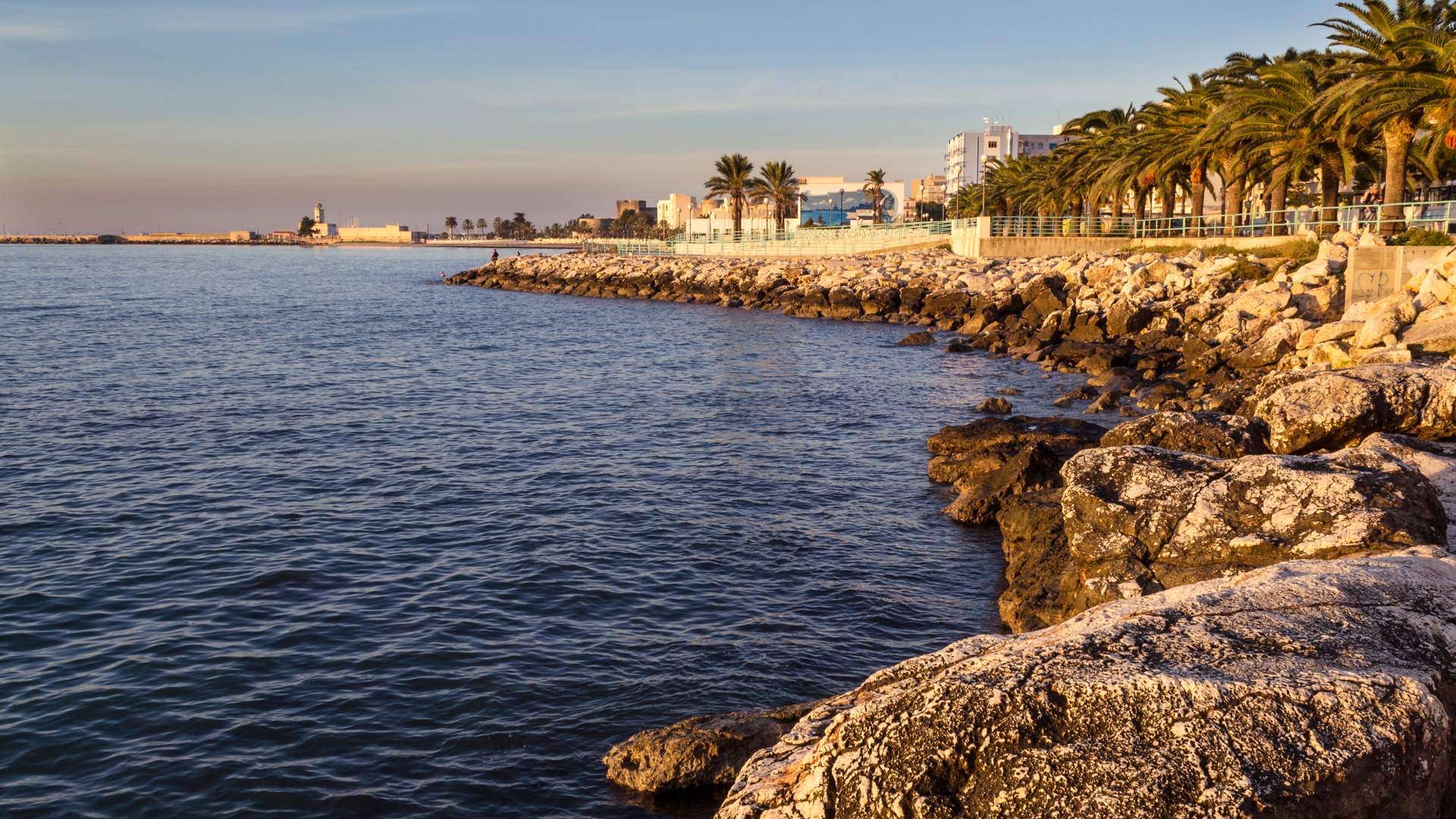
Tor di Lupo
One of the most photogenic spots on the coast: an Aragonese watchtower perched on a promontory of white rock, with sea on both sides below. Not a beach in the traditional sense but a rocky platform with steps carved into the limestone. The water here is deep and crystal clear — locals have been jumping straight in from the cliffs for generations.
Lido Tre Torri
The best-known lido in the Mattinata area. Sun loungers, bar, showers — everything you need for a comfortable day. The water in front is the kind that makes people go quiet: limestone underfoot rather than sand, but absolute transparency to the bottom. The right place if you have young children or simply prefer to be comfortable without scrambling over rocky paths.
The hidden beach of Mattinata
If you ask us directly and with a little persistence, we'll tell you where the locals go when they want peace: there's a cove north of Lido Tre Torri, reachable on foot in about 15 minutes on a partially marked rocky path. It has no name on the maps, no facilities, but water and silence that are worth every step. In August it still gets visitors, but never like the organised lidos. Start early, bring water.
Mattinatella: the cove that insiders know
Cala Rosa
Mattinatella is a small coastal hamlet with a tiny harbour and a few houses. Cala Rosa is one of the loveliest inlets in the area: pink-ochre rocks descending into dark green water, almost no sand, and a peace that in July and August seems remarkable just a few kilometres from the busy lidos. Reachable on foot from the Mattinatella car park in about 10 minutes. Free, no services — bring everything.
Vignanotica: the most famous of the hidden beaches
Vignanotica is technically a well-known beach — it appears in all the guides — but "well-known" in the Gargano still means something different from Tropea or Positano. The white pebble beach enclosed between two towering white cliffs is one of the most recognisable images of the southern Gargano.
You reach it from the SP53 via a car park (paid in summer) and a staircase of about 10 minutes. The path is steep, especially near the bottom — proper shoes are essential. Once you're down, the view is what it is: cliffs reaching 100 metres, emerald green sea, smooth white pebbles. Absolutely worth every step.
Baia dei Campi and San Felice: the arch zone
Baia di San Felice and the Arco di San Felice
Baia di San Felice is famous for its natural limestone arch spanning the promontory — one of the symbols of the Gargano. The bay below is a small pebble cove whose water changes colour with the hour: green in the morning, turquoise at midday, gold at sunset. The arch is best seen from a boat: if you're in the area, hiring a dinghy for a half day to navigate this stretch of coast is well worth it.
Baia dei Campi
Nearby Baia dei Campi is wider and more accessible, with a small beach club offering sun loungers and a bar. It's the ideal base for exploring the coast by sea: kayak and dinghy hire departs from here, as do guided trips to the sea-access-only coves between San Felice and Vieste.
Before Vieste: the wildest coves
The last 20 kilometres before Vieste hide some of the least known and most beautiful inlets on the entire Gargano coast. No road access, no official names on maps, often no services at all. To reach them you need to go by sea or be willing to walk unmarked paths.
Cala della Sanguinara
One of the hardest coves to reach and most rewarding to find. The rock here is dark, almost red where iron oxide colours it, and contrasts spectacularly with the crystal-clear water. Accessible only by sea or after a long walk on an unmarked path. If you hire a dinghy from Baia dei Campi or Vieste, ask to include it in the itinerary.
Portogreco
A small cove with an abandoned jetty — remnants of a landing used centuries ago to unload goods on the high coast. Exceptional water, flat comfortable rocks, and even in summer you often find space on weekdays. Foot access is possible but requires proper equipment; sea access is the most practical option.
Vieste: the final destination
Pizzomunno beach and the sea stack
The beach in front of Vieste's old town is wide, sandy and comfortable. The Faraglione — a 25-metre monolith of white rock rising from the sea close to the shore — is one of the most photographed landmarks in all of Puglia. The Vieste seafront in the evening, with the rock stack lit up and the bars full, is one of the summer scenes of the Gargano that is worth experiencing at least once.
Beaches north and south of Vieste
For more peace, move a few kilometres north or south of the centre: the beaches multiply, the lidos thin out, and with a little luck you'll still find free stretches. South towards the wilder Gargano, campsites with direct beach access are a very practical way to stay in less crowded areas.
A note on timing
The Gargano beaches are beautiful throughout the summer months, but the best time depends on what you're after. July and August are peak season — warm sea, everything open, everything busy. June has swimmable water, lidos are operating, but the crowds are still manageable. September is the month we most often recommend: the water has been warming all summer and stays warm until the end of the month, the beaches empty out noticeably after mid-August, and the Gargano returns to the slow, quiet place it is by nature.
Those who arrive in May often discover, to their surprise, free beaches, water already between 20 and 22°C in sheltered spots, and a quality of light over the landscape that is hard to find in the height of summer. Not classic swimming season — but one of the most beautiful times to walk the coast and understand why this place holds such a hold over those who know it.
Frequently asked questions
What is the most beautiful beach near Manfredonia?
Just north of Manfredonia, the Acqua di Cristo beach is the most convenient for guests staying in the city. For something more spectacular, a 20-minute drive takes you to the coves around Mattinata, where white cliffs meet turquoise water that rivals anything in the tropics.
How do you reach the hidden beaches of the Gargano?
Most of the best beaches between Mattinata and Vieste are accessible only on foot via rocky paths, or by sea with a dinghy or kayak. Some, like Vignanotica and Baia dei Campi, have car parks and steps. For Cala della Sanguinara and Portogreco, sea access is almost mandatory.
When is the best time to visit the Gargano beaches?
June and September are ideal: warm sea, accessible beaches without the crowds, easy parking and lower prices. July and August are beautiful but busy, especially the well-known beaches. The most remote coves stay relatively peaceful even in peak summer if you arrive early.
Can you snorkel in the Gargano?
Yes — the waters here are among the clearest in the Mediterranean. The best spots are the rocky coves between Mattinata and Vieste. Vignanotica, Baia di San Felice and the coves around the Pizzomunno rock at Vieste are particularly good.
How do you get to Vignanotica?
From the SP53 between Mattinata and Vieste: there is a paying car park in summer, from which you descend via a steep staircase of about 10 minutes. The beach is of white pebbles and is free. Arrive before 9am in July and August — the car park fills very quickly.